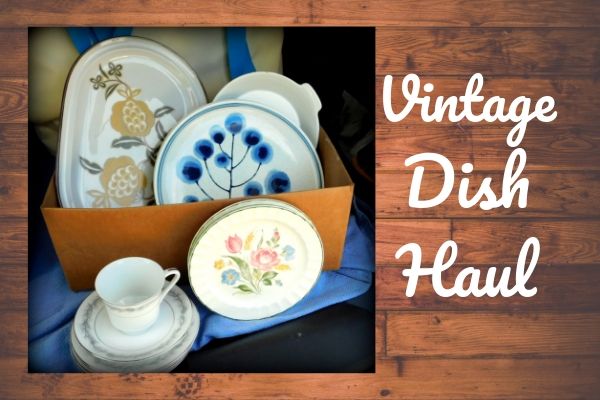
I saw something today that caught my imagination A well-known professional blogger, Darren Rowse of ProBlogger, suggested writing a list post, a round up of selected previous posts.
I’ve never done a story on Diary of a Dishie quite like this. So here goes.
Diary of a Dishie - Memorable Posts
My second post, back in 2008, was about having afternoon tea in Ireland. A short piece with a few photos, about a memorable day with a memorable friend. Lovely dishes and food, too.
One of the most popular posts is about tuna casserole. This one has an extra twist: It’s about ovenware, a recipe, and a job. You’ll have to read the post to get the whole story.
It’s enjoyable to make something good to eat, then use your wonderful dishes to serve it. So…baking figures into many posts on Diary of a Dishie. We did a series recently about Earth Day baking, as good a reason as any to enjoy the fruits of the earth and use your vintage china.
Food, dishes and friends often go together, too. When you make friends by blogging, swapping posts is almost as much fun as a Sunday feast. My colleague, Wanda Fitzgerald of Charm Chatter, wrote about Starbucks mugs for my blog, and I wrote about charming dinnerware for her readers.
One of the most surprising, most-searched terms is Big Top. As in the vintage peanut butter goblets from the 1950s and 1960s. There are people collecting sets of these, just like the people who collect grandma’s dinnerware pattern. It’s the meaning that makes these memorable.
Your interests can take you a lot of places. Blogging and dishes led me to meet Chef Lynn Miller, who makes great food and has a great collection of dinnerware of her own. There are several posts here about her food, showcasing wonderful dinnerware as well. Check out this post about dishes and food for Easter, or do a search on Chef Lynn and find all the pages and posts about her.
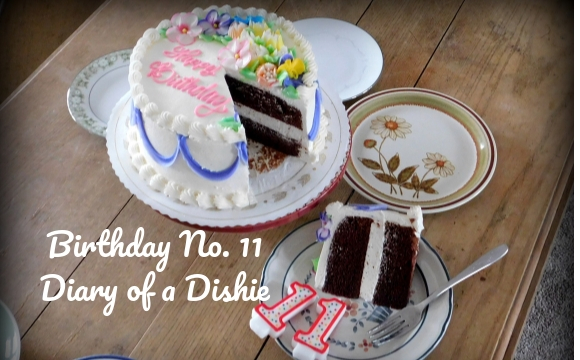
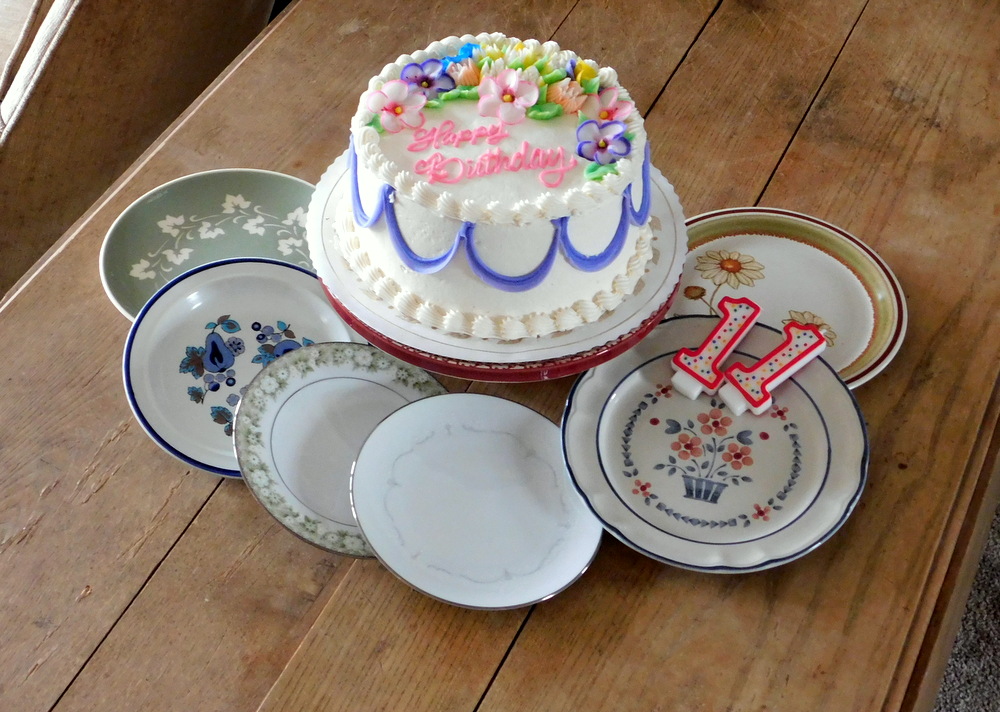
Happy Birthday Diary of a Dishie
One thing I’ve learned by doing this blog for more than two years is that we have a wonderful world full of great friends, fantastic food, and beautiful things to enjoy, especially in the realm of vintage dinnerware and china.
Dishes have meaning for a lot of people, because we associate them with good times, family and friends. Using special dinnerware can enhance our lives, and those of the people we care about the most.
When I’m out hunting for dinnerware, I find wonderful things that I’ve never seen, such as this Dudson china soup, salad or pasta bowl.
Dudson is made in England, and available in the US, including products designed for the restaurant and hotel tableware industries. The name was new to me when I found these large bowls.
I’m rescuing beautiful china from oblivion, and letting it come to my home (or yours) so it can have more useful life. These have a hand-applied glaze, and using them on the table is also like painting with dishes by mixing and matching the tableware.
Large bowls like this are great for serving yourself — perhaps a big dinner salad, an Asian noodle dish, or a big bowl of spaghetti. These are oversize, nearly 12 inches in diameter.
They are also useful on your buffet, as shown with some similar bowls in another pattern from the Dudson line. Your side dishes will go well in this kind of dinnerware.
My colleague Chef Lynn Miller, author of Flavor Secrets, made the delicious food: pasta salad, gazpacho and deviled eggs, which include a bit of leftover smoked salmon.
That’s another example of how to use the last of something for a tasty result. Her filling: egg yolks, mayonnaise, salt, pepper and the finely chopped salmon, that’s all.
Your serving pieces can be multitaskers for a versatile, creative table setting. Check this page for further tips to mix and match dinnerware on your table.
One of the sweetest vintage china patterns we find in our travels is Fantasia by Florenteen.
This dinnerware was made in Japan and is typical of 1960s patterns and products. Especially look at the swoop shapes of pieces such as the creamer, sugar bowl and gravy boat.
This china features dainty sprays of flowers in soft rose pink and blue, on a white background, and platinum rims.
Use this vintage dinnerware in your contemporary table setting when you want to have a charming, cottage table setting. Or for a special tea party with a group of intimate friends.
Fantasia will mix well with many patterns that are floral on white, especially those with smooth shapes.
About the photo: Fruit or dessert bowl in the Fantasia pattern, shown with a serving of Dark Chocolate Haagen Dazs ice cream, topped with a sprig of fresh mint.
Hot summer weather seems made for ice cream sodas and root beer floats.
A scoop of vanilla ice cream, some good root beer (favorites are Stewart’s and IBC at this house) and you are in business. Just be sure to make them right before you’re going to enjoy them.
In Michigan we also have a Boston cooler, which is similar, but uses Vernor’s ginger ale instead of root beer.
The floats are easier to make at home, because you don’t need the soda water.
Of course, if you really must have a soda, there are ways to have the fizzy water at home, and you can get the flavored syrups, too.
Any way you like them, ice cream sodas and floats will hit the spot on a warm summer afternoon, or anytime you’re looking to enjoy a vintage treat.
About the photo: China soda cups by Shafford, Sweet Temptations. Iced tea spoon by SRI, Love Leaf.
It is so nice to hear customer stories about how much they are enjoying the vintage dinnerware we helped them find. Sometimes they are finding the pieces to complete a collection. Other times, to start a new one.
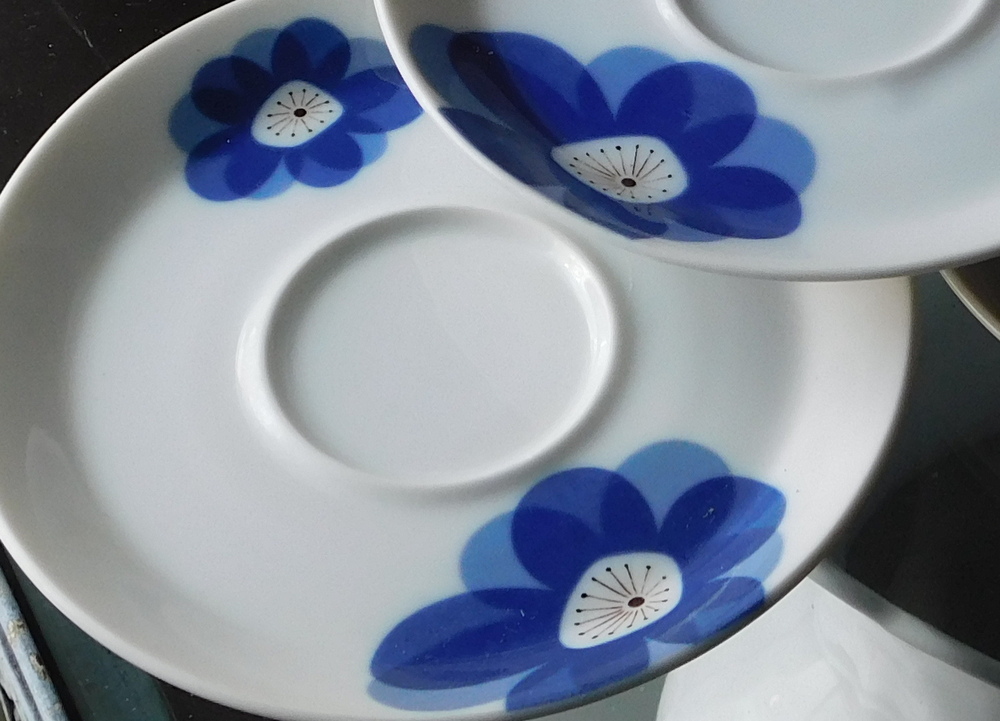
A box of vintage dishes in the Blue Orchard pattern went on its way this week, to charm a new kitchen in a new home. This dinnerware is from the 1970s vintage Cook n’ Serve line by Noritake, which I’ve mentioned before. (Marguerite is one of the other patterns in this line.)
It is heartening to connect people with special china and dinnerware - different than the thrill of the hunt in the first place.
This is how the story ends. Knowing that special pieces are going to good homes, to be used, loved and enjoyed, adds a special feeling - makes it even more fun to go out there and find dinnerware sets and other tableware items in need of being matched to owners who will use and appreciate them.
I know, these are not living things. But they are still special. They were crafted with care and have lots of useful and beautiful life left in them, if they can get into the right hands. (I know what happens to stuff that stays on the store shelf too long, and it’s not pretty.)
Vintage is green if used and reused.
Recently I got to explore the Love of Vintage in a pair of interviews with an online colleague and fellow blogger, Mitzi Swisher of Vintage + Goodness, who also enjoys vintage finds.
I set up a page on this blog, Hunting for Vintage Dishes, where you can listen to us interviewing each other.
On that same page, I’ve also posted a link to a new, short video, Vintage China and Dinnerware, which is now on our Kimbesa’s Closet YouTube channel. (Just click the Hunting for Vintage Dishes link above and scroll down a bit, or, you can play the small version below.)
This was an experiment, created using a tool called Search Stories by Google.
Playing with technology can be fun…almost as fun as playing with vintage china and table setting ideas!
About the photos: Platter in the Blue Orchard pattern by Noritake. In the collage, a few of the things we talked about in the audios. Top row, Dansk glassware and cutting board. Bottom row: Soreno by Anchor Hocking in gold, aquamarine and avocado green.
So simple, tuna sandwiches are easy to make as the weather warms up. Keep the filling cold and bring it out for a quick lunch around the pool, or even a picnic if you can keep the sandwiches cold and eat them promptly.
Never had an exact recipe for this one. I like lots of pickles, so I head for the high side. The celery seed is often easier, but the fresh celery is nice for a change, and to give it more crunch.
Tuna Salad Sandwich Spread
2 small cans tuna, drained
6-8 hard boiled eggs, chopped
4-6 large sweet pickles, chopped
1 t. celery seed or ½ c. celery, chopped
Enough mayonnaise to dress (start with about 1/3 cup and add more as needed)
Salt to taste
A couple of lettuce leaves goes nicely on this sandwich as well, if you have them. I also like the low-fat mayonnaise (vs. no fat).
For your choice of plate sizes, serve it on a luncheon plate to allow plenty of room for a fruit cup, a dessert in a fruit bowl, some grilled vegetables…you get the idea. Some plain glass Pyrex custard cups would work well. Some white milk glass custard cups could work for a cup of soup.
When I make tuna sandwiches, I like to get everything else ready while I’m cooking the eggs. Then chop the eggs warm, and have a sandwich right away. I like the freshness of “just made” tuna salad. Then refrigerate the rest for later.
These sandwiches make a cool lunch on a hot day…
You can also put this filling on bread open face, top with a slice of your favorite melting cheese, and give it 15 minutes in a toaster oven, on a baking sheet. At home we did this with Velveeta cheese. For a different taste, some Gruyere Swiss is good, and melts well.
I also like my pickles and eggs cut a little bigger, along with the rustic bread. But if you want to use this for a tea party, chop everything very fine, and serve on those thin tea breads. You can make the filling ahead, and assemble the sandwiches right before you will serve them.
About the photo: Tuna sandwich filling on Crunchy Oat bread by Aunt Millie’s (one of my favorites, has almonds in it as well). Plate is in the pattern we christened “Pea vine,” a vintage Noritake luncheon plate.
We complete our four-part series on Depression glass used in table settings, and the table setting contest winners from the recent Great Lakes Depression Glass Club show.
Fourth prize went to Dorothy Alden, for her a table setting using pieces in the Candlelight pattern and 3400 Blank, by Cambridge. Her table setting was also displayed as part of the education exhibit.
The Candlelight pattern by Cambridge Glass features a cameo-like candle motif, along with detailed floral sprays, in clear glass. The 3400 blank has gently scalloped edges. In this table setting, the plain charger plate is in cobalt blue glass.
A “blank” is a shape of undecorated glass. Many pieces of the same shape could be produced in clear glass, or a color, then etched to add the decoration and create different patterns.
Cambridge produced Candlelight from the 1930s to the 1950s. The factory closed in 1957.
Cambridge was located in Cambridge, Ohio, current home of Mosser Glass, which carries on the American tradition of handcrafted glass.
In the third part of our series about the winning table settings created members of the Great Lakes Depression Glass Club, we move on to a setting that combines elegant glass and china.
Mary Dunmire’s table setting took third prize, and featured her mother’s Fostoria crystal in the Chintz pattern, beautifully combined with china in the Rosebud Chintz pattern by Spode, made to go with the glassware.
Chintz was another beautiful glassware pattern by Fostoria, produced from about 1940 to 1973. Spode produced this china pattern from the 1950s to about 1971.
The dainty etched glass lights up china, and the dinnerware makes a colorful yet classic table setting. And what a great way to remember Mom by continuing to use her glass and china, to celebrate family events and special occasions.
We wrote about the company in our prior post about Fostoria American pattern glass. Fostoria’s glass is an American classic, in any pattern.
Second prize went to a table setting using the Orchid pattern by club member Margie Laski, who loves orchids and is president of the Michigan Orchid Society. Her table setting was displayed as part of the club’s educational exhibit at the show.
The Orchid pattern by Heisey features a detailed, etched floral motif with a prominent orchid.
A. H. Heisey & Co. was a glass maker located in Newark, Ohio for many years. Most of the pieces are marked with an H inside a diamond, and this mark is easy to identify once you become familiar with it.
Like other best quality glass, it is very clear, delicate, thin sides to pieces like wine glasses, and polished edges and mold lines.
The Heisey company closed in 1957. There is a Heisey Museum in its hometown in Ohio, which is a great place to visit, and learn more about this beautiful glass.
As part of the recent Great Lakes Depression Glass Club show, the members organized a table setting contest. The work of the four winners was on display as part of the club’s educational display at the show.
First prize went to an engagement party table setting using the American pattern by club member Joan Larson.
American was a very popular pattern made by Fostoria from about 1915 to the mid-1980s. Most of the pieces were made in crystal clear glass, but also sometimes in colors. The fact that this pattern was made for so long attests to its popularity.
This pattern has a three-dimensional cube or diamond motif, and lends itself to table settings for many occasions. It also coordinates well with lots of Art Deco and more modern dinnerware patterns.
Fostoria was briefly located in Fostoria, Ohio, but moved to Moundsville, W.Va. within a few years. Lancaster Colony took over in the 1970s, and closed the factory in 1983 (although they continued to make a few of the patterns after this point under the Colony name.)
Look for the clarity of the glass, and the polish (no mold lines) to help you distinguish American by Fostoria from the later pattern American Whitehall by Indiana Glass. If you can compare known pieces of each at the same time, it will help you identify each maker’s work.